
Facemash Genesis

You probably know that Facebook started as “Facemash,” which was a little toy coded by Mark Zuckerberg, and what it did was present you with images of two girls from Harvard’s student directory, and you click on who’s hotter.
It didn’t last long—the Harvard brass made Zuck take it down—but it laid the foundations for what would become “thefacebook.”

I’m rather proud of an article I wrote on here called “Lust and Evolution” and one of the things I talk about in it is my struggle with the sin of lust, and the most characteristic period of my life w/r/t this particular perversion was definitely the 8-and-a-half months I spent living in dorm at a major university. Looking at all the hot girls and assessing them—but in rather a bloodless kind of way, you know, a degree of abstraction removed from the lusts of my flesh. The primary tic at play when scanning the endless procession of hot girls was something more akin to data analysis—wanting to keep track of all the options so as to have a more complete picture of the situation, or something.
It came as kind of a Eureka moment to me that this is the exact type of situation which produced Facebook, and therefore social media in general—the thing that has completely reshaped our society and economy!
This maladaptation—lust, distant and rationalized—is just now reshaping all of us in its image.
The medium moulds its consumer, who is then an even better fit for the medium. It’s a viciously effective cycle by which we have been social media-ified in less than a generation.
But a world capable of producing Facemash was already very sick.

Wikipedia says: “by the end of Facemash’s launch day, at least 22,000 votes from a total of approx. 400 to 450 users were cast on the site.” That’s an average of 55 votes per person! Doesn’t that seem like a lot? Can you imagine choosing the hotter girl over and over and over again, 50 times? Without getting bored? You would have to have been mesmerized.
Something clearly had gone very wrong for American youth to be relating to attraction in this way. I mean, think about it: how strange, to judge images of the very same girls you could just go out and talk to. Well, I guess nerd-type guys often had a sort of proto-incel thing going on where they’ve been watching movies and ads featuring the Hottest Girl in the World as far back as they can remember, so they can’t “settle” for anything less; their standards are all warped. The Hottest Girl in the World is eternally above them, but actual imperfect girls, that might actually be into them, are all beneath them.
Certainly we wouldn’t have gotten to this place without TV. The fetishization of the image…McLuhan said electric technology was going to re-establish sound atop the hierarchy of the senses, after a few millennia of the eye’s domination due to literacy. Well, he might be right—I’ve been feeling pretty addicted to Spotify of late, and a cursory glance across my fellow denizens of public transit reveals a common affinity for the vice. As in, everyone’s wearing earbuds all the time. But the image is still king. Zuck’s generation was raised on TV.
We take “images of hot girls” for granted because we are very used to them. But looking at images of hot girls is truly a very strange thing to do and it is bound to warp the soul.
History of images of hot girls:
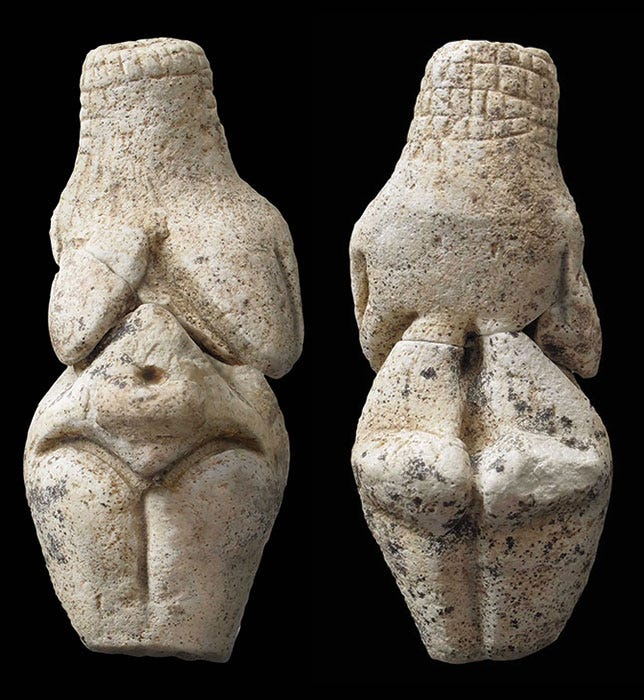
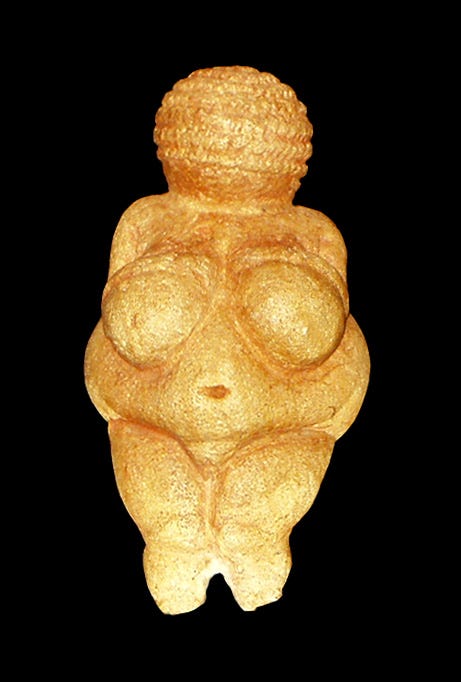
~30,000 BC: Venus figurines—little carved statues of voluptuous women, possibly some kind of fertility idol. Sex characteristics, thighs, belly exaggerated. These show up all over the place.
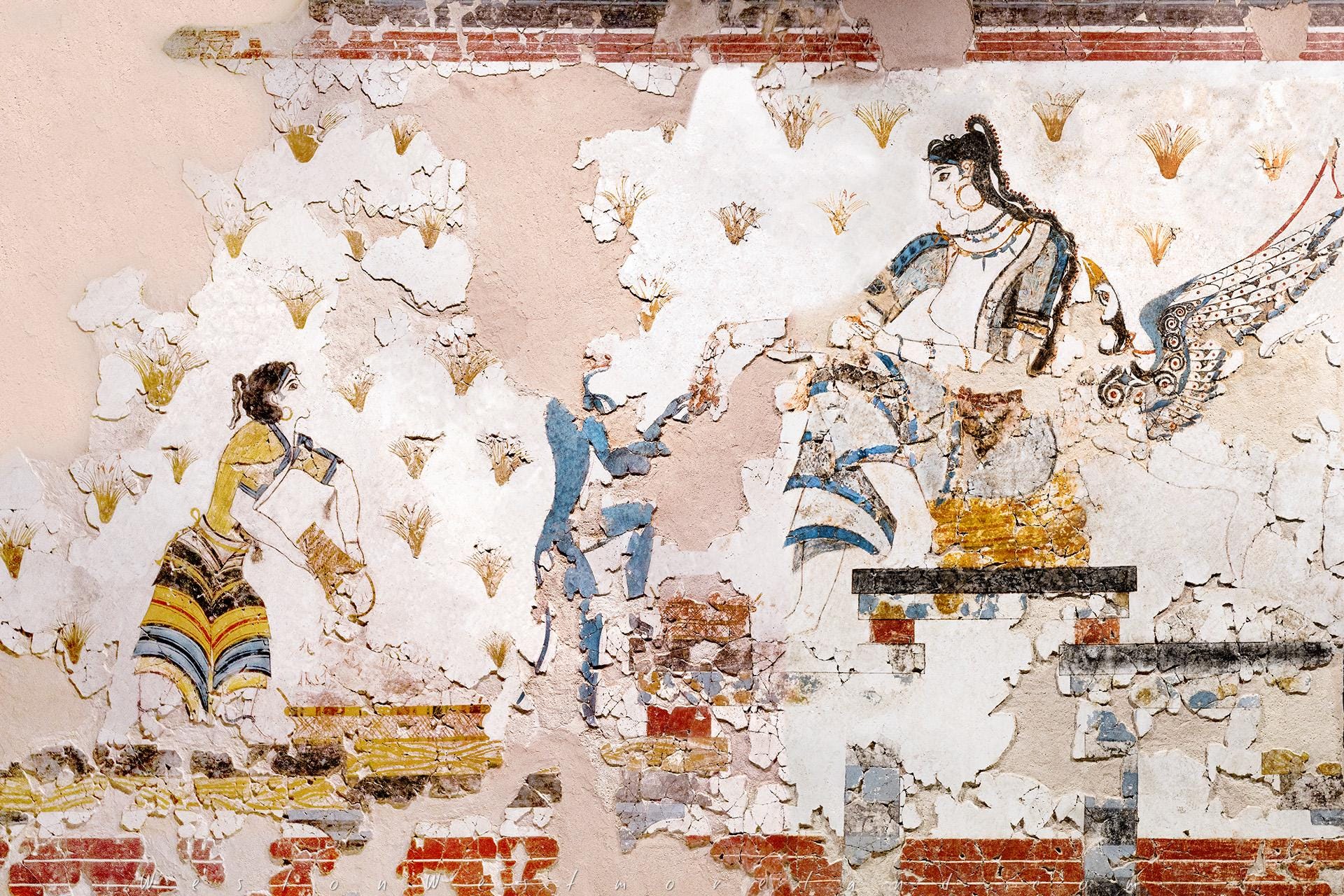
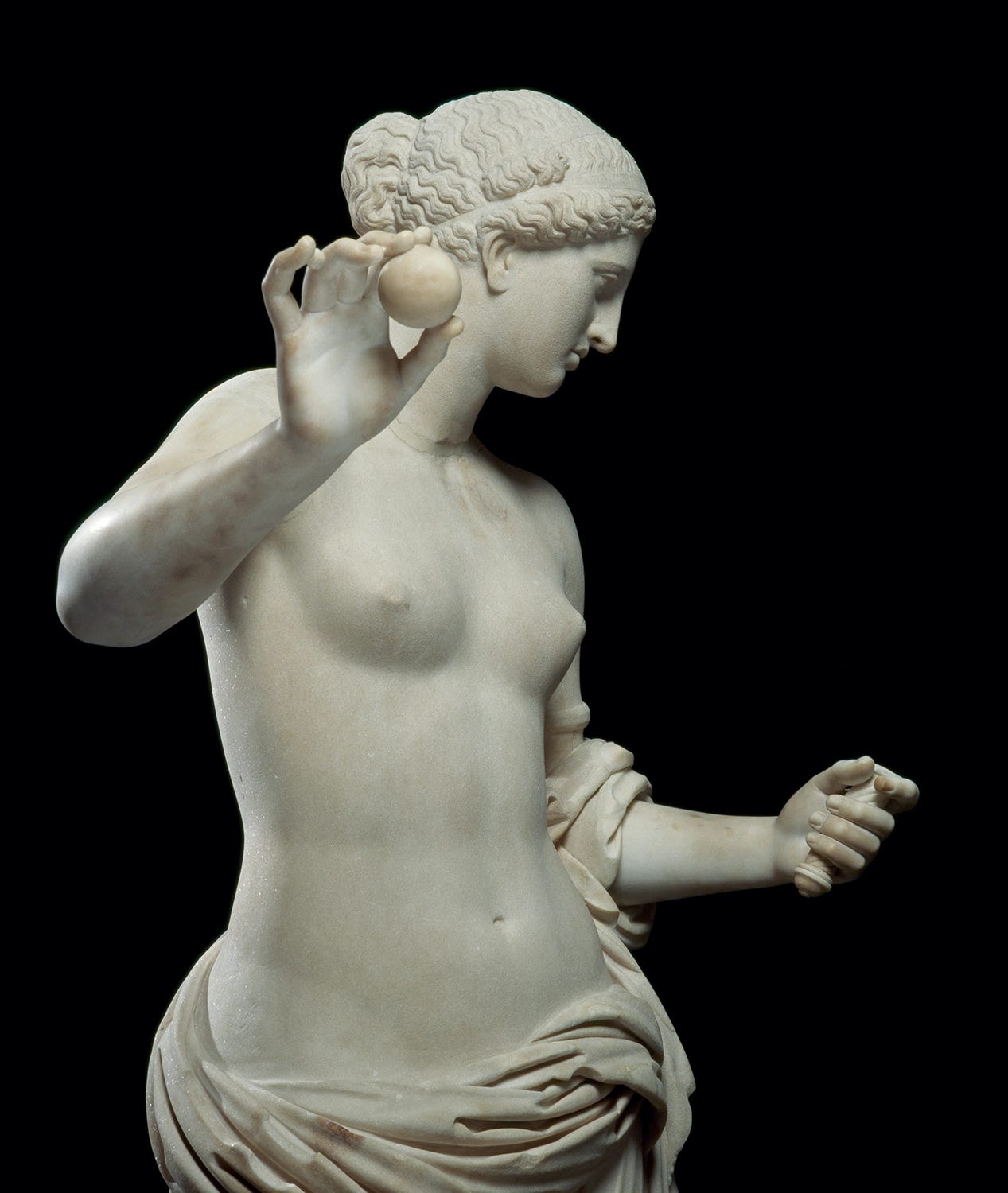
Ancient Greece + Rome: Frescoes, friezes, mosaics. Depicting lots of stuff, and sometimes hot girls. Idealized mythic figures mostly, like goddesses.
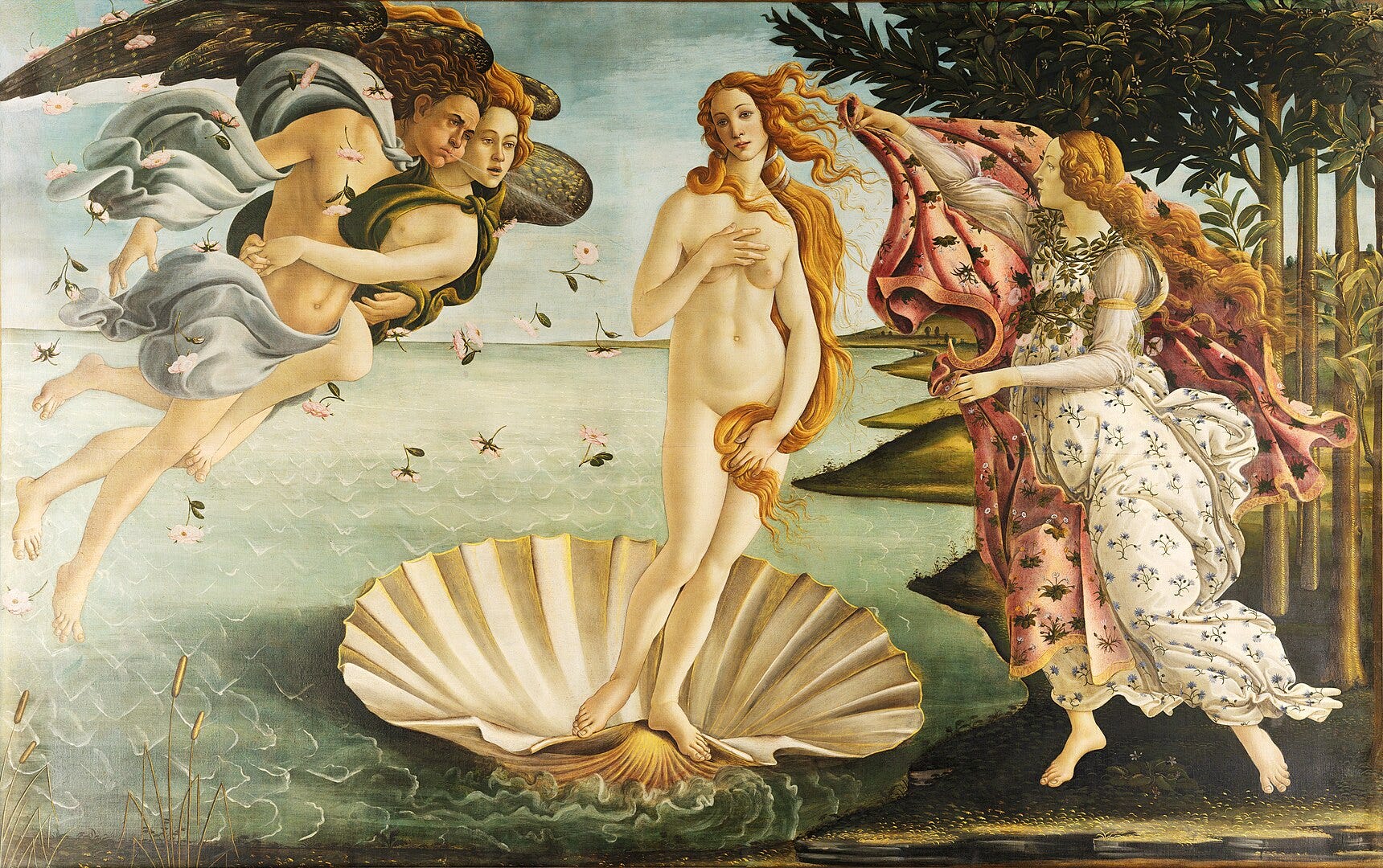
1400s-1500s: Renaissance portraiture takes realism to new heights. Female beauty becomes a consumable aesthetic object for the first time in the Christian world.
20th Century: Hollywood starlets—the hottest girls from a population of millions are “discovered” and put in front of a camera. Archetypes of hotness (the “blond bombshell”) are enshrined and exploited by advertising. Hot girl with a soda bottle, cigarette pin-up. Edward Bernays, nephew of Sigmund Freud, intentionally inflames animal desires to sell products, inventing modern advertising.

21st Century: infinite scroll of girls, some you know, some you don’t, some debasing themselves entirely, others not, most somewhere in the middle—and you the omnipotent and distant judge of all this beauty. So far removed.
We see that the images of women were always, until very recently, some kind of Platonic ideal of beauty or fertility. (Or grace, as in icons of the Theotokos, which I cannot in good conscience include in an overview of images of “hot girls” throughout history, but without which we cannot understand the history of artistic representations of the feminine at all.)
Perhaps this is coming full circle, now, in the form of AI generated “hot girls.” Pure “hotness,” just the consensus pattern, divorced from flesh and context.

But the goddess has always been portrayed as completely indifferent to you. Statues and frescoes simply are. They are not clamouring for your attention the way the cigarette pin-up girl is (or the AI girl). We can even see the beginning of this movement with Botticelli’s Venus, who is looking right at you. Quite unlike the goddess in the Minoan fresco, who is aligned perpendicular to our world.
I have to say, I have a real instinctive hatred of the AI girl image. I really loathe it. Maybe an uncanny valley thing? I just don’t like how she’s looking at me.
~
Emerson said “the attempt to attract directly is the beginning of falsehood.”
What does this mean? Well, it is not itself falsehood. If I am a master stonemason, and I want to get a contract to build a wall for someone, I am going to say “I am a master stonemason and I’ve done this and this” and this is an attempt to attract directly and I may be telling the full truth. What Emerson says is, it’s the beginning of falsehood. Because if I am making direct attempts at attracting people, I am now abundantly incentivized to play up my good side. To exaggerate. To downplay my flaws, even to hide them. Now, none of this is technically lying. It’s all stretching the truth. But once you’re in this place, it’s very easy for lies to creep in and for you to rationalize them. And any lie you tell, in the context of a direct attempt to attract, is one you’re now obliged to keep up.
The images on Facemash were official pictures in the student directory. They weren’t attempting to attract. But as soon as Facemash becomes Facebook, everyone is incentivized to curate their persona to attract attention. Now, if the attempt to attract directly is the beginning of falsehood, then many of us must be living a lie by now!
The point of this article is that the two dominant energetics in social media are lust (particularly by the masculine) and the attempt to attract directly (particularly by the feminine).1 These two perversions have a dysfunctional, although complementary, relationship. They feed on each other but never get fed. That was the point of the article, I just did the “history of images of hot girls” thing because I wanted to put the Venus figurines in there, I like them. Ok God bless and thanks for reading and I’ll see you all at church tomorrow!
When I refer to “the masculine and the feminine” I am not talking about men and women necessarily but about the energies of gender. This is a pretty universally accepted idea in hippie circles and my lovely ex-girlfriend used to talk about it all the time. A brilliant Orthodox friend in
(Paisios) told me about it the other day so evidently it is an Orthodox belief as well. Anything that the hippies and Orthodoxy both agree on is guaranteed to be true. So if you’re unfamiliar with this way of thinking about gender I recommend you look into it. A good place to start would be Ivan Illich’s book Gender.
I believe the "images of hot girls" you refer to are an inversion of the true feminine beauty we can perceive in the icon of the Theotokos. The deceptive images invite you to have purely appearance-based relations devoid of reality. With the icon of the Mother, her appearance is "covered", in the sense of a mystery being hidden. She—like nature—reveals her mystery, her reality, only to those who have pure intentions and, therefore, a "chaste" gaze; to the "unworthy", she remains a closed enigma. It is then (almost?) impossible to enter into a purely appearance-based relation through the icon. In fact, her "covered" appearance is retroactively beautified and revealed to be the ultimate beauty to those who can "see" her mystery through her veil(s); for them, the veil ceases to be an "obstacle" but becomes the very means of disclosure. She shows by not showing, whereas the deceivers fail to show by showing. The heavens bent down to her "earthly" beauty, and she was made their Queen.